
Paramol Pain Relief Tablets 32
Paramol tablets (paracetamol 500mg and dihydrocodeine 7.46mg) for short-term relief of acute moderate pain when other painkillers have not worked.
- Combines paracetamol with dihydrocodeine (co-dydramol)
- For headache, migraine, period pain, toothache, back, muscle and joint pain
- Short-term use only: no more than 3 days
- Adults and young people aged 12 and over
- 32 tablets. Pharmacy medicine, checked by our pharmacist
£12.49
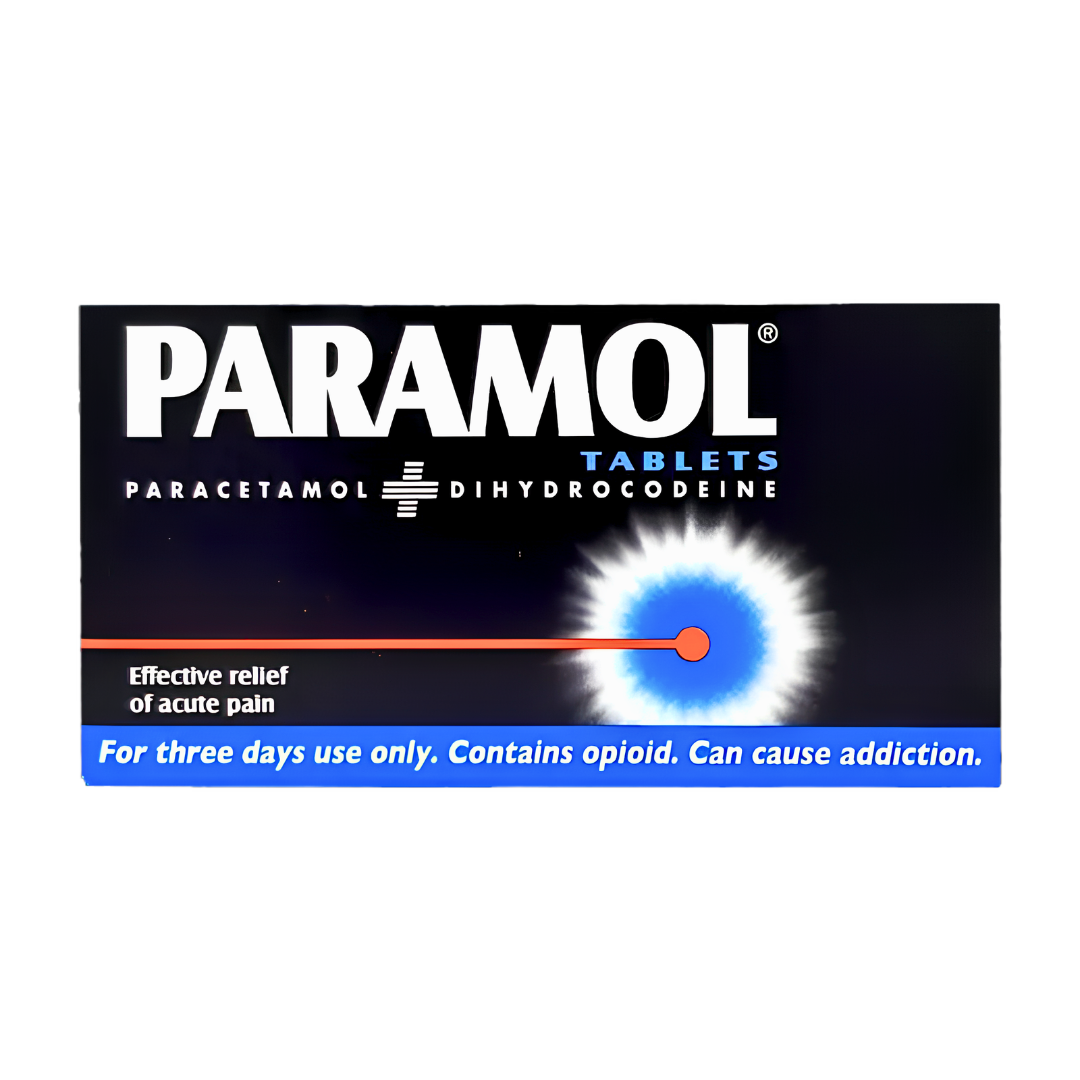
Paramol tablets contain paracetamol 500mg and dihydrocodeine tartrate 7.46mg, a combination known as co-dydramol. They are for the short-term treatment of acute moderate pain that has not been relieved by paracetamol, ibuprofen or aspirin alone. This pack contains 32 tablets.
What is Paramol?
Paramol is a pharmacy (P) medicine. It combines two painkillers that work in different ways: paracetamol, and dihydrocodeine, a mild opioid. Because it contains an opioid, it is only for short-term use, it can only be sold by a pharmacy, and our pharmacist checks every order before it is sent.
What is Paramol used for?
Paramol is licensed for acute moderate pain that other painkillers have not helped, including:
- headache and migraine
- period pain
- toothache and other dental pain
- backache
- muscle and joint pain
- nerve pain (neuralgia)
Try paracetamol, ibuprofen or aspirin on their own first. Paramol is for when these have not worked.
How to take Paramol
- Adults and young people aged 16 and over: 1 or 2 tablets every 4 to 6 hours. Do not take more than 8 tablets in 24 hours.
- Young people aged 12 to 15: 1 tablet every 4 to 6 hours. Do not take more than 4 tablets in 24 hours.
- Not recommended for children under 12.
- Take the tablets during or after a meal if possible.
- Do not take Paramol for more than 3 days in a row. If your pain is no better after 3 days, speak to your doctor.
- Do not take it with any other medicine that contains paracetamol, codeine or dihydrocodeine.
Dihydrocodeine: use it safely
Paramol contains dihydrocodeine, which can cause addiction if it is taken continuously for more than 3 days. Taking it for longer or more often than directed can lead to dependence, and stopping can cause withdrawal symptoms. Taking any painkiller for headaches on more than 3 days can also make the headaches worse (medication-overuse headache). Speak to your doctor or pharmacist if you find you need Paramol for longer, need more than the recommended dose, or feel unwell when you stop taking it.
If you take too much, get medical help straight away, even if you feel well. A paracetamol overdose can cause serious liver damage that only shows up later.
Side effects of Paramol
Possible side effects include constipation, feeling or being sick, stomach pain, dry mouth, drowsiness, dizziness, headache, blurred vision and confusion. Stop taking it and get urgent help if you have signs of a serious allergic reaction, such as difficulty breathing, swelling of the face or a severe skin rash. Tell your doctor if you notice unusual bruising or bleeding, a sore throat or mouth ulcers, or severe pain in the upper tummy that spreads to your back.
Paramol can make you drowsy, dizzy or confused and can affect your vision. Do not drive or use machines if you are affected.
Who should not take Paramol
Do not take Paramol if you:
- are allergic to paracetamol, dihydrocodeine or any of the ingredients
- have breathing difficulties
- are dependent on alcohol
- have raised pressure in the head, a head injury, fits (convulsions) or a sudden severe tummy problem
- have severe or bloody diarrhoea, especially after antibiotics, or diarrhoea caused by poisoning
- take an MAOI antidepressant, or have taken one in the last 14 days
- are pregnant or breastfeeding
- are under 18 and have had your tonsils or adenoids removed for sleep apnoea
- know that you break down codeine into morphine very quickly
Speak to a pharmacist or doctor first if you have asthma or other breathing problems, liver or kidney problems, an underactive thyroid, low blood pressure, an enlarged prostate, bowel or gallbladder problems, myasthenia gravis, or a history of drug or alcohol misuse; or if you take other opioids, sleeping tablets, benzodiazepines, SSRI or other antidepressants, flucloxacillin or warfarin.
Other pain relief options
If you have not yet tried a simple painkiller, Panadol Advance 500mg tablets (paracetamol only) may be enough. Solpadeine Max is another pharmacy painkiller that combines paracetamol with an opioid, codeine; never take it with Paramol. See our full range of pain relief.
Order Paramol online
We are a GPhC-registered UK pharmacy (1126145) based in Bury, Greater Manchester. Because Paramol is a pharmacy medicine, you will be asked a few short questions before you can add it to your basket, so that our pharmacist can check it is suitable for you. If you have any questions, call our pharmacists on 0161 222 1024.
Always read the label and the patient information leaflet before use. If your symptoms do not improve, speak to your pharmacist or doctor.
Medically reviewed by Hassan Khan MPharm, Pharmacist Independent Prescriber (GPhC 2067135), Superintendent Pharmacist, Bury Healthcare Online (GPhC-registered pharmacy 1126145). Last reviewed: November 2026.


