
Acne Scars & Dark Marks: What Actually Works
Most “acne scars” are actually marks that fade — and treatment speeds that up. Here’s what clears with a cream, what genuinely needs a procedure, and what tretinoin really does.
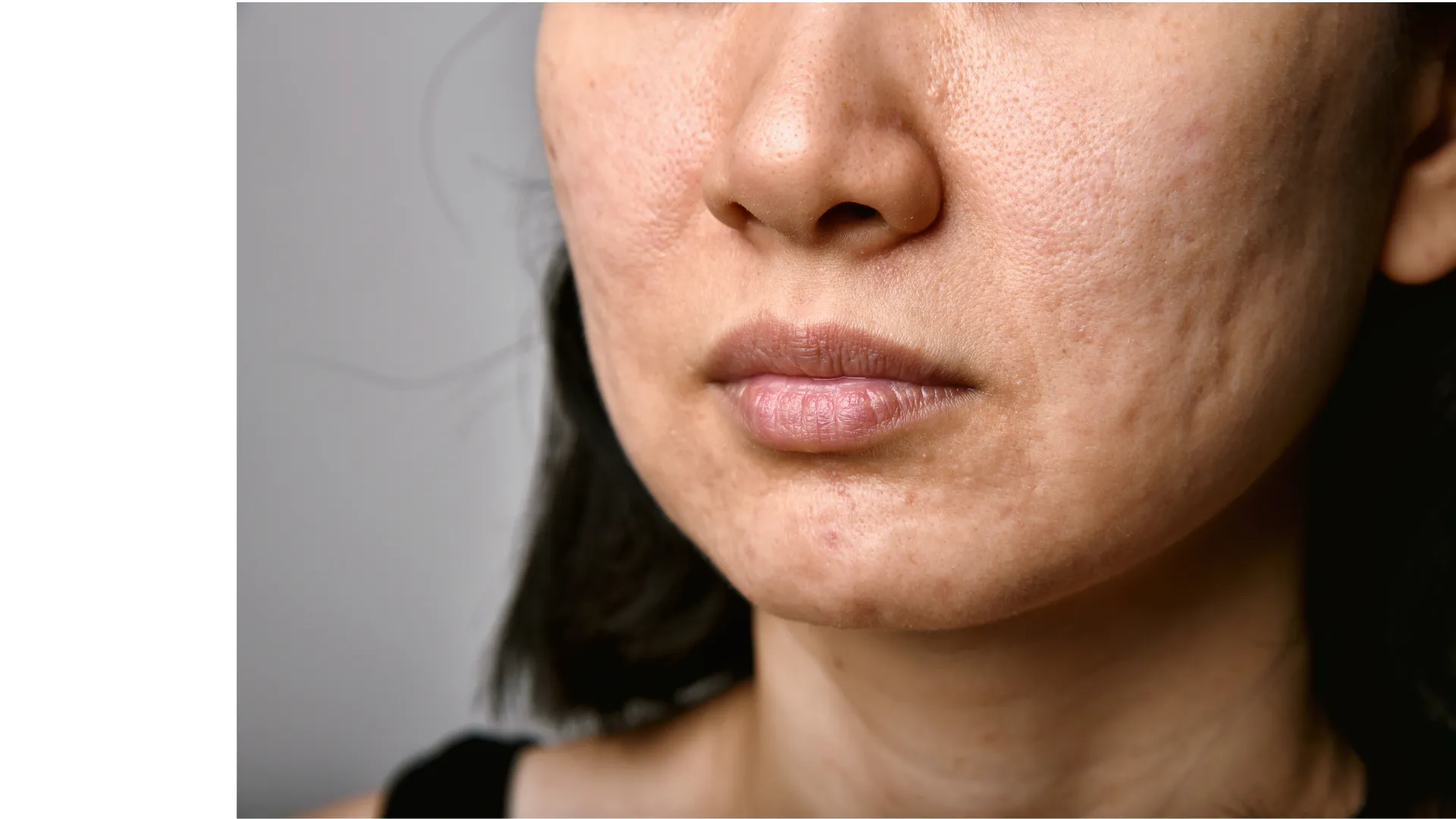
First, which kind of “scar” do you have?
Most of what people call acne scars are actually marks — flat red patches (post-inflammatory erythema) or brown patches (post-inflammatory hyperpigmentation, PIH) left after a spot heals. These fade, and treatment genuinely speeds that up. True scars change the skin’s texture: pitted “ice-pick” or rolling scars, or raised scars. These are permanent skin-structure changes, and no cream — prescription or otherwise — removes them.
Being honest about which kind you have is the whole game — it’s what decides what’s actually worth your money.
Red and brown marks: very treatable
The single most effective thing is stopping new spots — every breakout you prevent is a mark that never forms. That’s why treating the acne itself comes first: our Treclin gel consultation covers the licensed clindamycin + tretinoin combination for inflamed and mixed acne. On top of that, the tretinoin component speeds skin-cell turnover, which helps brown PIH marks fade faster over 12+ weeks, and azelaic acid (coming soon to the clinic) is particularly good for pigmentation and safe in pregnancy. Daily SPF 30+ is non-negotiable — sun exposure is what makes PIH darker and slower to fade.
Pitted and textural scars: honest answer — procedures, not creams
Tretinoin used consistently for 6–12 months can modestly soften very shallow atrophic scarring by stimulating collagen, and that’s the limit of what topicals do. Genuine pitted scarring responds to procedures — microneedling, laser resurfacing, chemical peels, subcision — performed by a dermatologist or qualified aesthetic practitioner. If that’s your situation, the right first step is a specialist referral, not a prescription cream, and we’ll tell you that in a consultation rather than sell you something that won’t work. (See how to see a dermatologist in the UK.)
What a realistic plan looks like
Active acne plus marks: treat the acne first (Treclin, 12-week course), SPF daily, then reassess — most marks fade substantially once breakouts stop. Marks only, no active acne: retinoid or azelaic-acid based fading over 3–6 months. Established pitted scars: specialist procedures, with skincare in a supporting role. Every impressive scar “before and after” you’ve seen involved months of treatment — anyone promising fast results is selling something.
Start with the skin you have now
A 5-minute consultation, reviewed personally by our pharmacist prescriber, and refunded in full if prescription treatment isn’t right for you.
Acne scars — frequently asked questions
How do I get rid of acne scars?
It depends on the type. Flat red or brown marks fade with time, sun protection and treatments like tretinoin or azelaic acid. Pitted or textural scars are permanent structural changes that need procedures such as microneedling or laser — creams cannot remove them.
Does tretinoin help with acne scars?
It helps brown post-inflammatory marks fade faster, and long-term use can modestly soften very shallow scarring by boosting collagen. It will not remove pitted scars. Its biggest contribution is preventing the breakouts that cause new marks.
How long do acne marks take to fade?
Red marks usually settle over weeks to a few months; brown marks (PIH) take 3–6 months or longer, especially in deeper skin tones. Treatment and daily SPF speed this up; picking spots and sun exposure slow it down.
Do I need a dermatologist for acne scarring?
For pitted or raised scars, yes — procedural treatment is specialist territory. For marks and active acne, a pharmacist prescriber can start effective licensed treatment online the same day.