
How to Get Rid of Back Acne (Bacne)
Back acne is more stubborn than the acne on your face — but it responds to the same proven treatments. Here’s what actually clears it, and when you need more than a cream.
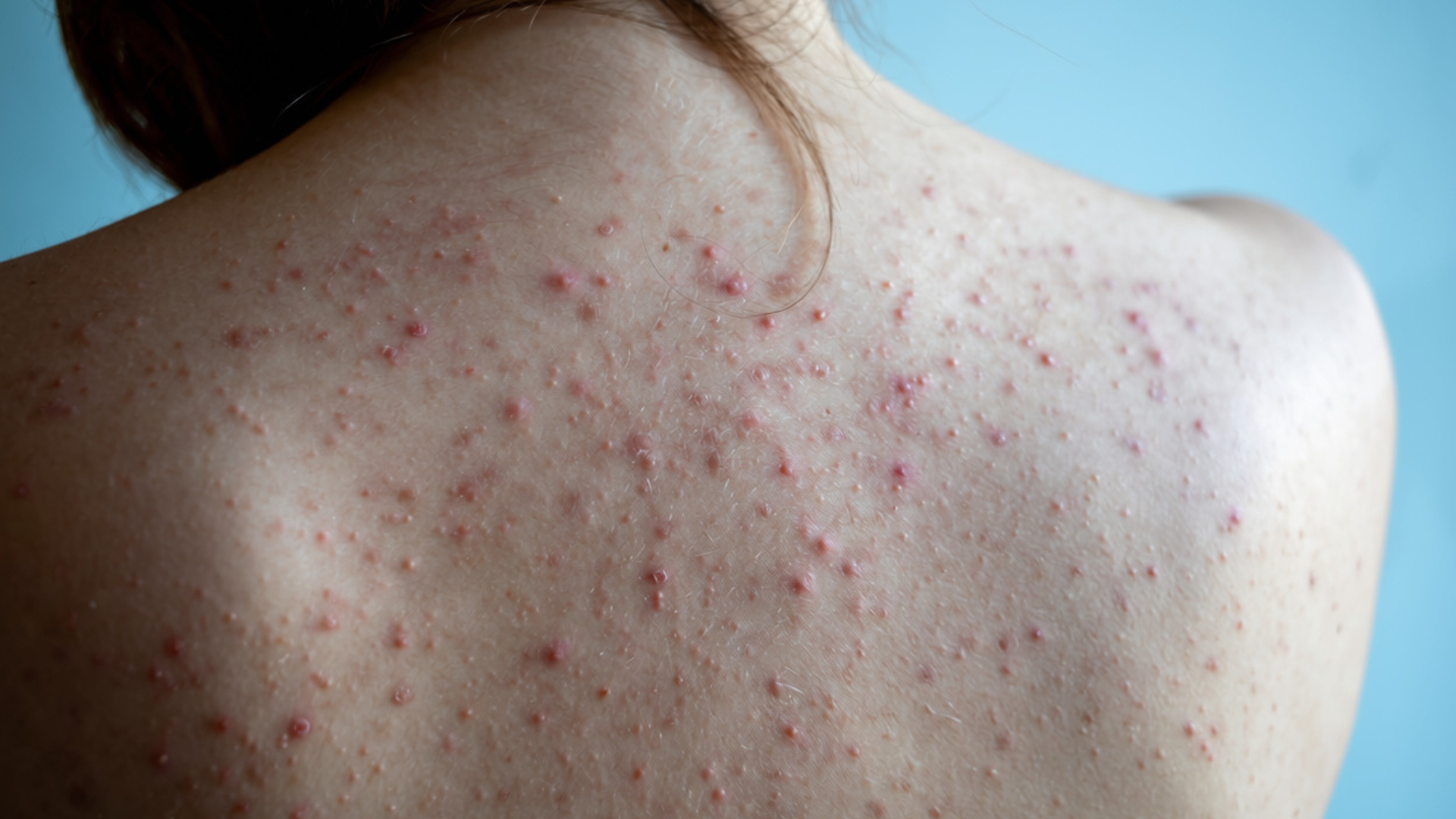
Why back acne (bacne) is more stubborn than facial acne
The skin on your back has more, and larger, oil glands than your face, sits under thicker skin, and spends most of the day covered — so spots there are often deeper, slower to clear and easier to irritate. Friction and trapped sweat make it worse: tight tops, backpacks, sports kit and gym benches rub sweat and oil into the pores (sometimes called “acne mechanica”). The good news is that back acne responds to the same proven treatments as facial acne; the main challenge is simply reaching a large area consistently.
None of it is caused by being unclean — scrubbing harder usually just inflames it further.
Start here: the everyday changes that actually move the needle
Before any prescription, get the basics working, because they do a lot of the job. Shower and change out of damp kit as soon as you can after exercise. Choose loose, breathable clothing when you can, and wash gym wear regularly. Rinse conditioner and long hair off your back last in the shower, as oily hair products running down the back are a common trigger. And use a benzoyl peroxide wash (available from any pharmacy without prescription) in the shower a few times a week — it kills acne bacteria, doesn’t cause antibiotic resistance, and a wash is far more practical for covering a whole back than a small tube of cream. Give any routine a full 8–12 weeks; back acne is slow to turn around.

When prescription treatment helps — and its honest limits on the back
For limited or patchy back acne, a prescription topical can be added to a benzoyl peroxide wash — for example the licensed clindamycin-and-tretinoin combination in our Treclin gel consultation, which tackles both the bacteria and the blocked pores. The honest caveat is coverage: a single 30g tube is designed for a face, so treating an entire back with a topical gets impractical and expensive. Topicals therefore suit a defined area — the tops of the shoulders, or a stubborn patch — rather than blanket coverage. Because Treclin contains an antibiotic, it’s used for a maximum of 12 weeks alongside benzoyl peroxide, and because it contains a retinoid it can’t be used in pregnancy or breastfeeding. Widespread, deep or persistent back acne usually needs oral treatment rather than a cream, which is a prescriber decision.
Not sure how bad your back acne is?
Our pharmacist prescriber reviews your photos personally and tells you honestly whether a cream will help or whether you need something stronger.
What causes back acne in women specifically
In women, back and body acne is often driven by hormonal shifts — around periods, with polycystic ovary syndrome (PCOS), or when coming off certain contraceptives — because androgens increase oil production. It can also flag conditions worth checking if it’s sudden, severe or comes with other symptoms like irregular periods or excess hair growth. Hormonally driven acne still responds to topical and oral acne treatment, but if there’s an underlying cause, that’s worth addressing with your GP too. Our consultation asks about this so the prescriber can point you the right way rather than just supply a cream.
When back acne needs more than a cream
Some back acne is beyond what any topical will fix. Large, deep, painful lumps (nodules or cysts), acne that’s spreading fast, or acne that’s already leaving scars should be assessed for oral treatment or a specialist referral — cystic and scarring acne is often isotretinoin (Roaccutane) territory, which only a dermatologist prescribes. Our consultation is built to spot this: if your answers or photos suggest you need more than first-line treatment, we tell you and point you to the right route (see how to see a dermatologist in the UK) instead of selling you something that won’t be enough.
What about the marks it leaves behind?
Back acne loves to leave brown or red marks, and sometimes true scars, partly because it tends to be deeper and partly because clothing friction keeps irritating it. The single best way to prevent bacne scarring is to calm the active acne down and resist picking. The marks themselves are treated much like facial ones — our guide to acne scars and dark marks explains which fade with treatment and which need a procedure, and why “bacne scar cream” alone rarely does much on its own.
Start with the skin you have now
A 5-minute photo consultation, reviewed personally by our pharmacist prescriber, and refunded in full if prescription treatment isn’t the right answer for your back acne.
Back acne — frequently asked questions
How do I get rid of back acne (bacne)?
Start with a benzoyl peroxide wash a few times a week, shower promptly after sweating, and wear loose breathable clothing — then give it 8–12 weeks. For spots that don’t settle, a prescription topical can be added to a defined area, and widespread or deep back acne may need oral treatment. Avoid scrubbing or picking, which makes marks and scarring worse.
What causes back acne in females?
Usually hormonal shifts that raise oil production — around periods, with PCOS, or when changing contraception — combined with sweat and friction from clothing. If it’s sudden, severe, or comes with irregular periods or excess hair growth, it’s worth mentioning to your GP as well, as there may be an underlying cause worth treating.
Does back acne need different treatment from facial acne?
The medicines are the same, but the practicalities differ. The back is a large, hard-to-reach area with thicker skin, so washes (like benzoyl peroxide) are more practical than small tubes of cream for broad coverage, and widespread back acne is more likely than facial acne to need oral treatment.
Can I use a prescription cream like Treclin on my back?
Yes, for a limited or patchy area such as the shoulders. A single tube is sized for the face, so it isn’t practical for covering an entire back — for that, a prescriber may recommend oral treatment instead. Treclin is used for up to 12 weeks and isn’t suitable in pregnancy or breastfeeding.
Will back acne leave scars?
It can, because it tends to be deeper and clothing keeps irritating it. Clearing the active acne early and not picking is the best prevention. Existing marks and scars are treated much like facial ones — see our acne scars guide for what fades with treatment and what needs a procedure.